If you are reading this, you are probably deep in wedding planning mode, tabs open, vendor emails piling up, and somewhere in the middle of all of it, you keep coming back to the same question: should my dog actually be there?
It is one of the most common questions we get before couples ever reach out to us. And it is one of the most important ones to answer honestly before the planning goes any further.
Here is what we know after supporting dogs at more than 140 weddings: the answer is not always yes. And the couples who ask this question before committing, rather than assuming their dog will figure it out on the day, are already doing right by their dog.
This post gives you a real framework for working through it. Not a checklist designed to get you to book. Not a pep talk that assumes you should include your dog no matter what. Just the honest questions worth asking, and the information worth having, so you can make the decision that is actually right for your specific dog.
Why This Decision Is Worth Taking Seriously
A wedding day is one of the most emotionally charged, logistically complex, high-stimulation environments a dog will ever encounter. Unfamiliar venue. Large crowd of strangers. Elevated human emotion that dogs feel acutely. Music, movement, unpredictable moments. Two people the dog loves most who are completely unavailable for hours at a time.
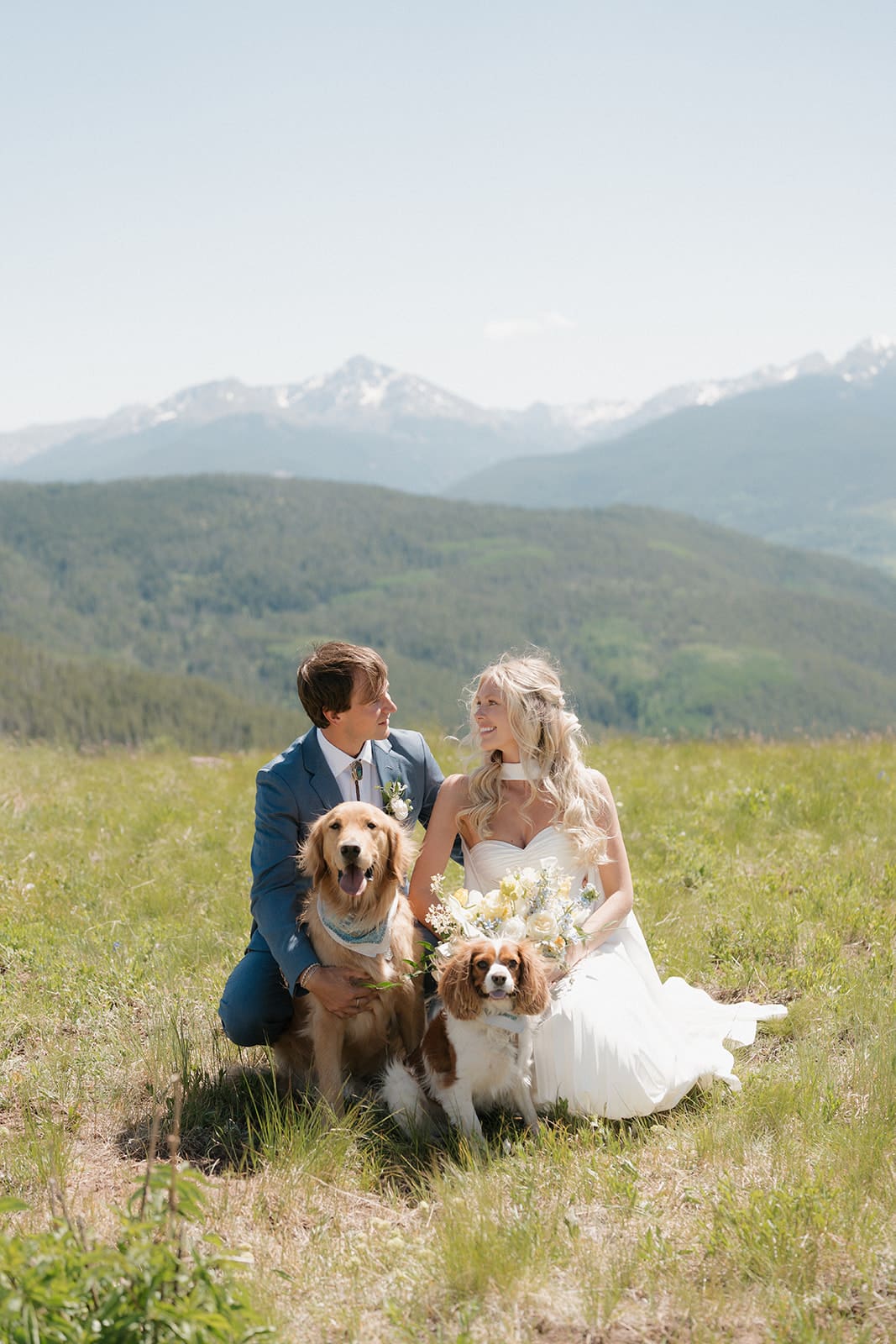
For the right dog, with the right support, this can be a genuinely beautiful experience. We have watched dogs walk down aisles with calm confidence, spend cocktail hour being adored by every guest in the room, and curl up contentedly while their people said their vows.
For the wrong dog, in the wrong environment, without adequate support, it can be a genuinely stressful experience. And a dog who is stressed at a wedding cannot tell you. They just absorb it.
That is why this question deserves a real answer, not just an enthusiastic yes because you love your dog and want them there. Loving your dog well sometimes means making the harder call.
The Four Factors That Actually Determine the Answer
When we work through this question with couples, we look at four things. No single factor makes or breaks the decision. It is the combination that tells the real story.
Temperament: what kind of dog do you actually have?
This is the most important factor and the one couples most often assess through the lens of hope rather than honesty. We understand that. But the dog you need to bring to a wedding is the dog you actually have, not the dog you believe they can be on a special day.
Dogs who tend to thrive at weddings are social and food-motivated. They warm up to new people within a few minutes., can be redirected with a treat or a familiar voice, and are curious about new environments rather than overwhelmed by them. They regulate. Even when they are excited, they come back down.
Dogs who tend to struggle are anxious at their core. They are overwhelmed by unfamiliar environments, loud sounds, or being away from their person. Their stress does not reduce over time in a new situation. It compounds. For these dogs, a wedding day is not an adventure. It is hours of sustained activation with no way to fully decompress.
Neither description is a moral judgment. An anxious dog is not a bad dog. It is a dog who deserves to be protected from situations that genuinely frighten them.
The wedding environment: what will the day actually look like?
A 90-minute outdoor ceremony with 40 guests at a private ranch is a categorically different environment from a 6-hour indoor ballroom wedding with 200 people. Both might be described as “dog friendly” by the venue. They are not the same experience for the dog.
Consider: indoor versus outdoor. Crowd size. Noise level. How many transitions there are throughout the day. Whether there is a quiet space available if the dog needs to step away. Whether the venue has any wildlife, water, or other environmental factors that could complicate things for your specific dog.
Timeline: how long is too long?
Most dogs do well for 2 to 4 hours at a wedding. Beyond that, even the most easygoing dog begins to fatigue mentally and physically. The question is not just whether your dog can be there. It is how long they should actually stay.
For most couples, the sweet spot is ceremony, portraits, and cocktail hour. After that, the dog goes home safely and the couple moves into the reception knowing their dog is taken care of. A well-timed exit is not a compromise. It is good planning.
Support: who is responsible for your dog on the day?
This factor changes everything. A dog who might struggle with minimal support can often thrive with the right professional in their corner. A dog who would do fine with a family member might do even better with someone whose only job is them.
The quality of the support available to your dog on the day is one of the most significant variables in this decision. It is also the one most couples underestimate until the day arrives.
The Yes Dog
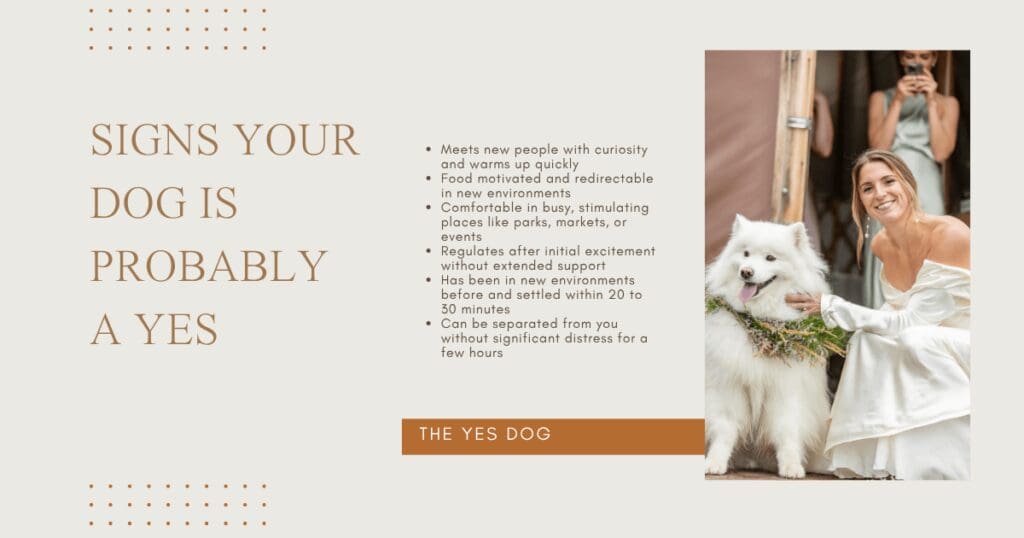
The yes dog does not need to be perfect. They do not need to be trained to competition standard or unflappable in every situation. They just need to be a dog who moves through new experiences with more curiosity than fear, who can be redirected and regulated, and who genuinely enjoys the company of people.
We have supported hundreds of yes dogs at weddings. They walk down aisles with confidence and spend cocktail hour being adored. They curl up calmly during the ceremony, apparently unbothered by the entire production happening around them. For these dogs, being at the wedding is genuinely a good day.
The Maybe Dog
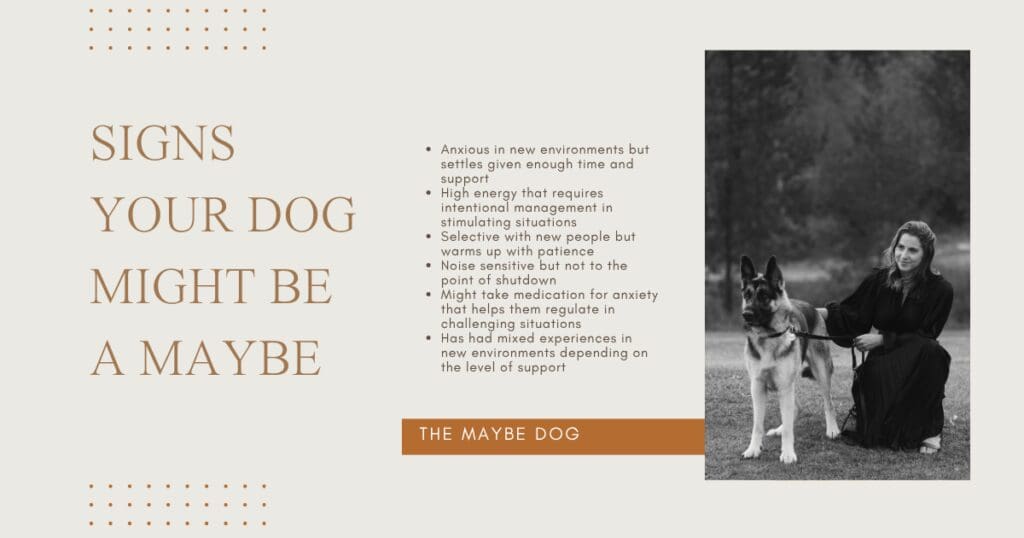
The maybe dog is the most common dog we work with. And the maybe dog can absolutely be at your wedding with the right plan behind them.
For high-energy dogs, a vigorous morning exercise session before the wedding can change the entire trajectory of the day. We have taken dogs on 4-mile hikes the morning of their wedding for exactly this reason. A tired dog is a regulated dog.
For anxious dogs, the meet-and-greet with their handler in advance, the early venue arrival for acclimation, the careful timing of any medication, and the presence of someone who knows their stress signals all combine to create an experience the dog can actually manage. Shiloh, a rescue with significant anxiety and weather sensitivity, walked down the aisle at Flying Diamond Ranch in Steamboat Springs in the middle of a storm because the plan behind her was built for exactly that kind of challenge. Read Shiloh’s full story here.
The maybe dog is not a no. The maybe dog is a conversation. And that conversation is exactly what our discovery call is designed for.
The No Dog
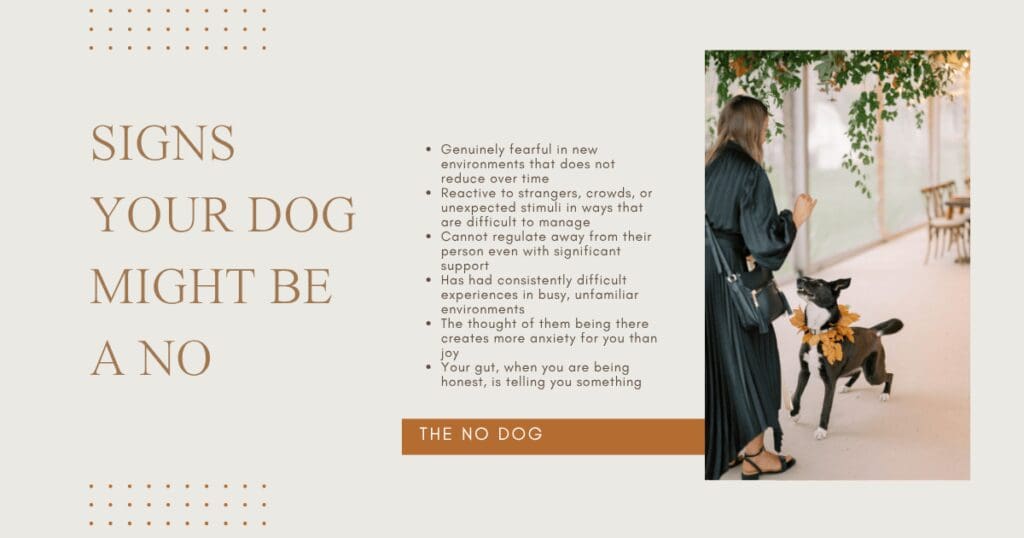
We will always do what is best for the dog. Even when that is a harder conversation to have.
One of the most meaningful things that has ever happened in this business involved a couple named the Millers and their dog Oakley. They had planned to have Oakley at their wedding. Everything was arranged. And then, as the day approached, it became clear that Oakley’s anxiety was significant enough that being there would not be a good experience for her. The kindest thing was to let her stay home with someone she loved completely.
Hollie’s words to them in that moment: “I always want to do what is best for the dog.”
The Millers made the harder call. And their review, months later, said everything about what that decision reflected about them as dog owners and as people.
“Hollie is a GEM and a DREAM to work with. We were planning on having our dog at our wedding but when anxiety got the best of our sweet Oakley, we decided last minute to leave her home. It was a sad choice, but the right choice. Hollie was so understanding and in her exact words: ‘I always want to do what is best for the dogs.’ We have kept in touch since the wedding day and have become friends.”
— The Millers and Oakley
Leaving your dog home is not a failure. It is not a lesser love. In some cases it is the most loving thing you can do for them. And the couples who make that call with honesty and grace carry it lightly, because they know they did right by their dog.
What to Do If You Are Still Not Sure
You do not have to figure this out alone. When couples reach out to Plus the Pups and are genuinely uncertain whether their dog should be there, that uncertainty is exactly what our discovery call is for.
We talk through your dog. Their temperament, their history in new environments, their relationship with strangers, their anxiety triggers if they have them. We talk through your wedding: the venue, the timeline, the size of the crowd, the environment. And then we give you our honest read.
Sometimes that honest read is an enthusiastic yes. Other times it is a yes with a carefully designed plan. Sometimes it is a gentle no, offered with care and without judgment.
We are not here to talk you into or out of anything. We are here to help you make the decision that is actually right for your dog. That is the whole job.
A Note on Partial Inclusion
Your dog does not have to be there for all of it or none of it. Some of the most meaningful dog moments at weddings happen in a 45-minute window: the first look, a few portraits, a brief appearance at cocktail hour. Then the dog goes home on a high note, well before they have had enough.
Partial inclusion is not a compromise. For many dogs it is actually the ideal experience. They get the moment. They get to be part of the day. And they leave before the stimulation tips from exciting to overwhelming.
If your dog is a maybe and you are uncertain about a full timeline, start by designing a shorter window and see how they do in the lead-up. The plan can always expand. It is much harder to walk it back once you have committed to a full day. Read all the ways to work with us here.
Frequently Asked Questions About Having Your Dog at Your Wedding
It depends on the severity and the support available. Mild to moderate anxiety in a dog who responds to their handler and can be regulated with preparation, medication if prescribed, and experienced support is very different from significant anxiety in a dog who genuinely cannot settle in new environments. We have successfully supported anxious dogs at weddings many times. We have also had honest conversations with couples where leaving the dog home was clearly the right call. The answer lives in the specifics of your dog, not in a general rule.
High energy and well trained is actually one of the most common combinations to work with. A dog who responds to commands and is food motivated can be managed effectively in a wedding environment with the right handler and the right preparation. The most important tool for high-energy dogs is a vigorous morning exercise session before the wedding. We have taken dogs on 4-mile hikes the morning of the wedding specifically to set them up for a calm ceremony. A tired dog is a regulated dog.
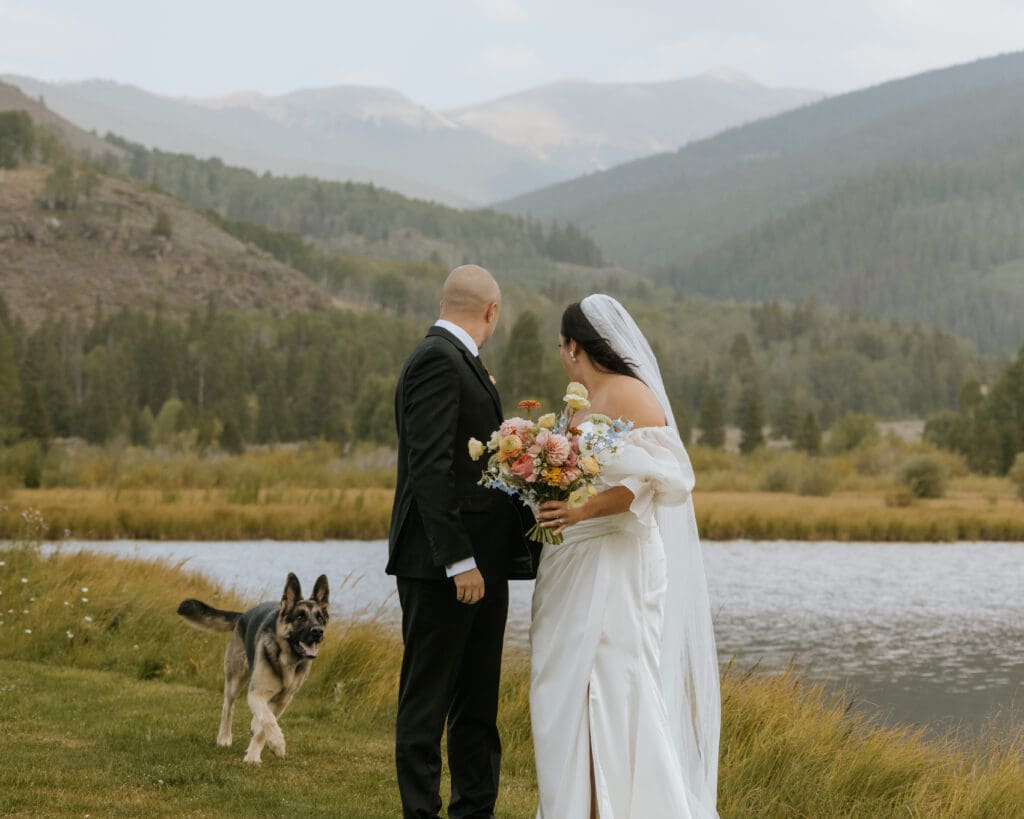
Venue permission and the right decision for your dog are two separate things. A venue can be dog friendly and still present specific challenges: a lakefront ceremony site with wildlife, an on-mountain venue accessed by gondola, an indoor reception with limited quiet space. Think about your specific dog in your specific venue environment, not just whether dogs are technically allowed. If you are uncertain, a conversation with an experienced wedding dog concierge before you finalize the plan is worth far more than making assumptions on the day.
By remembering that you made the decision from love, not fear. A dog who stays home with someone they trust completely, in an environment they find safe and familiar, is having a good day. A dog who is overwhelmed at a wedding, unable to regulate, separated from their person in an unfamiliar place, is not. The couples who make the harder call almost always tell us afterward that they feel at peace with it. You honored your dog. That is enough.
Absolutely, and for many dogs this is actually the ideal plan. A well-timed 45 to 90 minute window covering the first look, portraits, and part of cocktail hour gives your dog a meaningful role in the day without pushing them past their threshold. They leave on a high note, before the stimulation becomes too much. We build the dog’s timeline around their specific capacity rather than fitting them into the wedding timeline. The two do not have to be the same.
Colorado mountain weddings introduce specific factors worth considering: elevation, weather that shifts quickly, unfamiliar terrain, and often longer travel days for destination couples. For dogs who are comfortable in outdoor environments and have the right support in place, mountain weddings can be extraordinary. For dogs with weather sensitivity or significant anxiety, the unpredictability of mountain conditions adds a layer of complexity that requires honest pre-wedding planning. We work at mountain venues across Colorado regularly and are happy to talk through what your specific venue and dog situation looks like.
I’m Hollie, Founder of Plus the Pups.
Plus the Pups is a bespoke wedding dog concierge service based in Colorado, with a team serving couples across the country and beyond. Founded in 2022, we have been part of more than 140 weddings, from intimate mountain elopements to full destination wedding weekends.
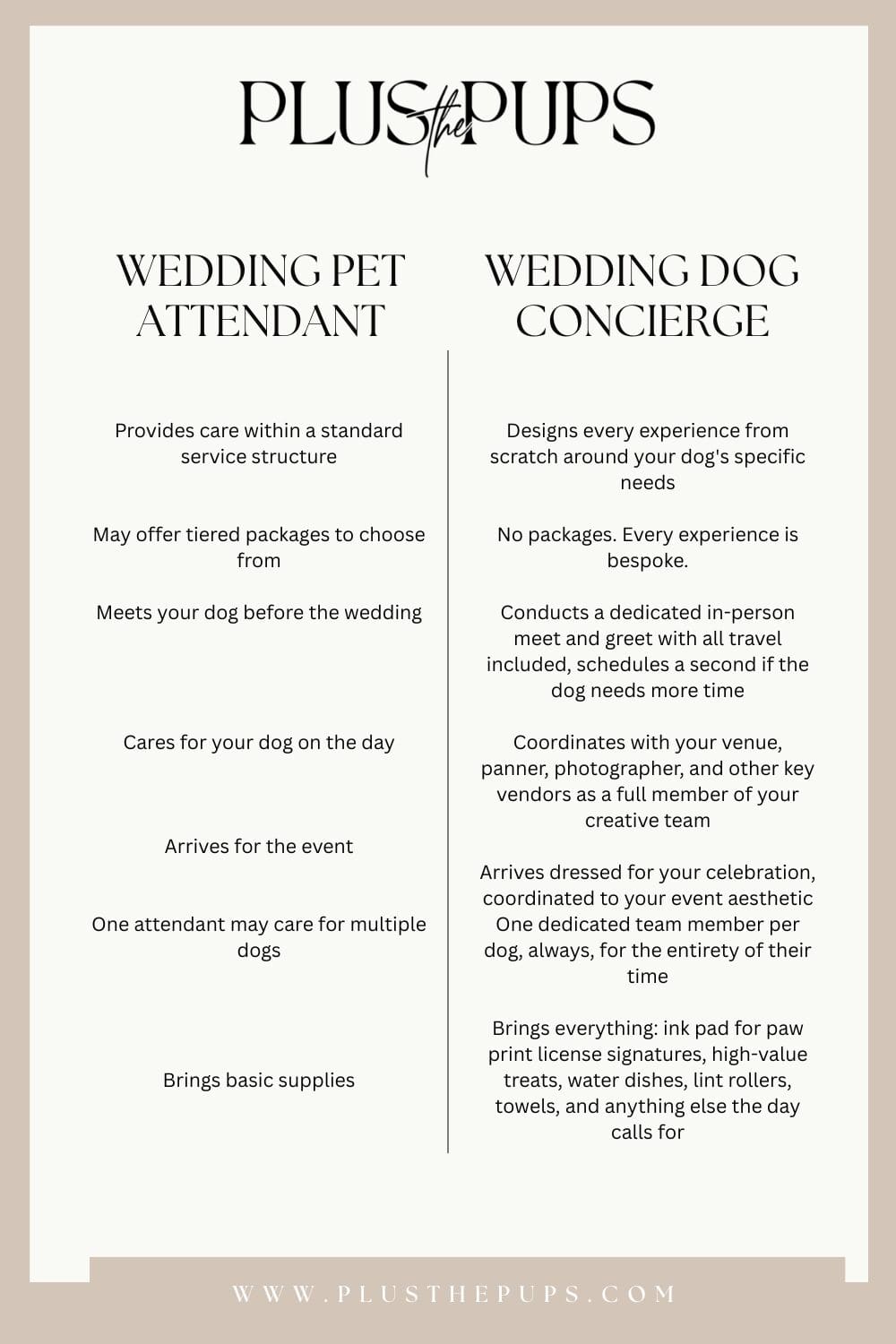
Want to understand what proper support actually looks like for a dog at a wedding? Read this next: What is a Wedding Pet Attendant and Why Your Wedding Needs One
Still not sure whether your dog is right for your wedding day? That is exactly what our discovery call is for. We will talk through your dog, your wedding, and give you our honest read.